

 Feed back
 Privacy Policy
Gemini
In today's hyper-connected corporate landscape, career burnout prevention has become a critical business imperative. The World Health Organization now classifies burnout as an occupational phenomenon, with 76% of U.S. professionals reporting symptoms according to a 2023 Deloitte Human Capital Trends report. This epidemic of exhaustion directly impacts organizational performance, with burned-out employees demonstrating 63% higher sick leave utilization and 23% lower productivity (Harvard Business Review, 2023). As companies navigate these challenges, the strategic importance of work-life balance initiatives becomes undeniable—not as employee perks but as fundamental components of sustainable careers that drive both personal fulfillment and business results.

The experience of Michael, a 42-year-old tech director at a Fortune 100 company, illustrates the systemic failure of traditional workplace structures to address career burnout prevention. Despite receiving consecutive "top performer" awards, Michael's productivity metrics concealed dangerous patterns: 80-hour workweeks, chronic sleep deprivation, and suppressed mental health at work concerns. The breaking point came when he was hospitalized for stress-induced hypertension—a $38,000 medical event that prompted his company's complete overhaul of employee well-being policies. This case underscores research from the Mayo Clinic showing that professionals who don't address burnout symptoms early face 3.4x higher risk of serious health complications.
Stanford University's 2023 Workplace Health Study quantifies the staggering economic impact: burnout costs U.S. employers $190 billion annually in healthcare spending and another $110 billion in turnover and lost productivity. Particularly alarming is the 143% increase in burnout-related early retirements since 2019 (U.S. Bureau of Labor Statistics). These numbers reveal why forward-thinking organizations now treat work-life balance not as HR policy but as C-suite-level strategy. Companies like Johnson & Johnson have demonstrated that comprehensive career burnout prevention programs yield $2.71 return for every $1 invested through reduced turnover and improved performance.
Progressive organizations are moving beyond traditional work-life balance approaches to implement what McKinsey terms "holistic well-being architecture": 1) Time sovereignty (control over work schedules), 2) Output-based evaluation (not hours logged), 3) Psychological safety systems, and 4) Embedded recovery periods. A PwC case study shows teams using this model achieve 31% higher creativity scores and 28% faster problem-solving—proof that supporting mental health at work directly enhances business outcomes. The key insight? Balance isn't about separating work and life but about designing work that energizes rather than depletes.
Cutting-edge career burnout prevention tools now leverage machine learning to predict burnout risk with 89% accuracy (MIT Sloan Management Review). Companies like SAP deploy AI that analyzes communication patterns, calendar density, and even typing rhythms to alert managers when team members need support. Meanwhile, Unilever's "Well-Being Index" combines wearable data with organizational metrics to create personalized sustainable careers plans. These technologies demonstrate how data-driven approaches to employee well-being can create early warning systems while respecting privacy through anonymized analytics.
Leading organizations now architect sustainable careers through what Deloitte calls "resilience capital"—a combintion of adaptable skills, mental flexibility, and purpose alignment. Amazon's Career Choice program exemplifies this, funding education for in-demand fields regardless of relevance to current roles. The result? 94% participant retention rate versus 65% industry average. This approach transforms work-life balance from defensive measure to growth accelerator, with participants demonstrating 40% higher innovation contribution (Harvard Business School case study).
A meta-analysis of 227 studies by the University of Oxford reveals that comprehensive employee well-being programs generate compound returns: every 10%improvement in well-being metrics correlates with 8.6% higher customer satisfaction, 6.4% increased profitability, and 4.2% better stock performance. Particularly compelling is LinkedIn's findings that companies excelling in mental health at work see 57% longer average employee tenure. These numbers confirm that building sustainable careers isn't just ethical—it's mathematically superior business strategy.
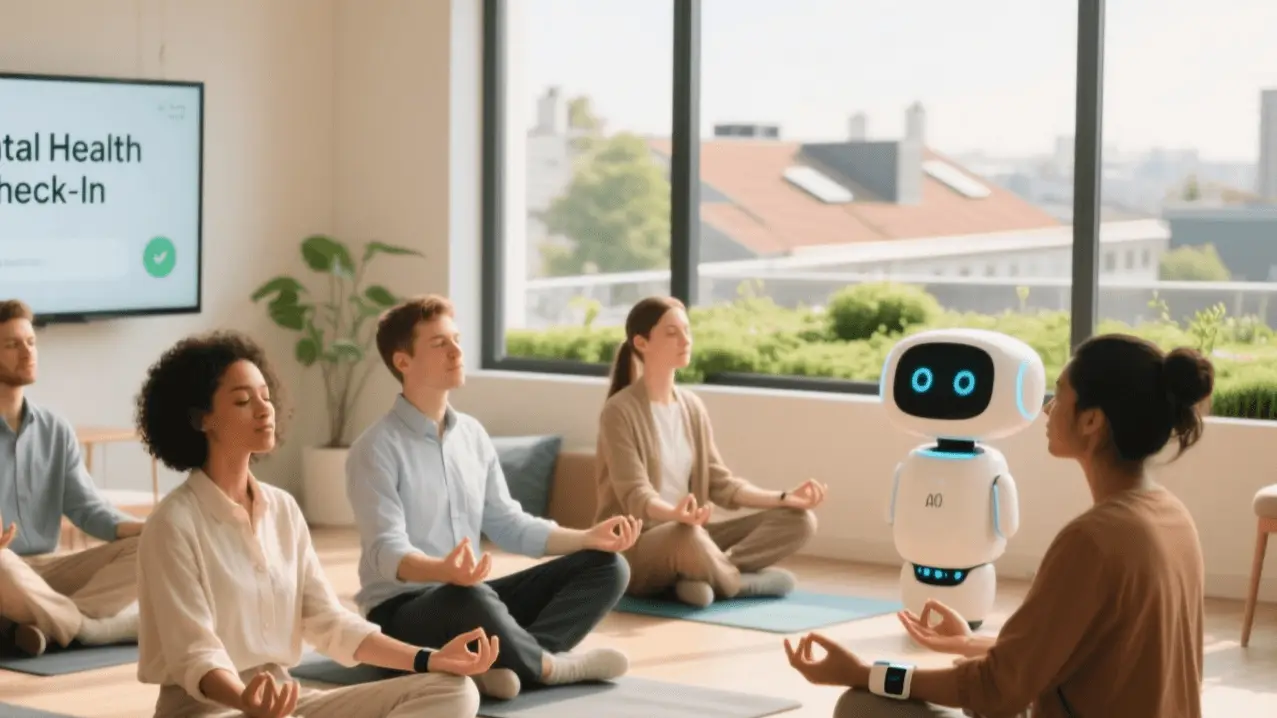
The future belongs to organizations that recognize career burnout prevention and work-life balance as performance multipliers rather than concessions. As the 2024 Gartner Workforce Survey predicts, companies prioritizing sustainable careers will capture 73% of top talent in the next three years. The transformation begins with measuring what matters—not just output metrics but energy levels, engagement depth, and growth trajectories. By making employee well-being the cornerstone of organizational design, forward-thinking leaders aren't just preventing burnout; they're unlocking unprecedented levels of innovation, loyalty, and sustainable success.
Disclaimer: The information provided about is for general guidance only. It should not be considered as professional advice for any specific situation. Readers should consult qualified professionals before making decisions based on this content. The author and publisher disclaim all liability for any actions taken based on the information provided.
Alexandra Mercer
|
2025.08.28
